
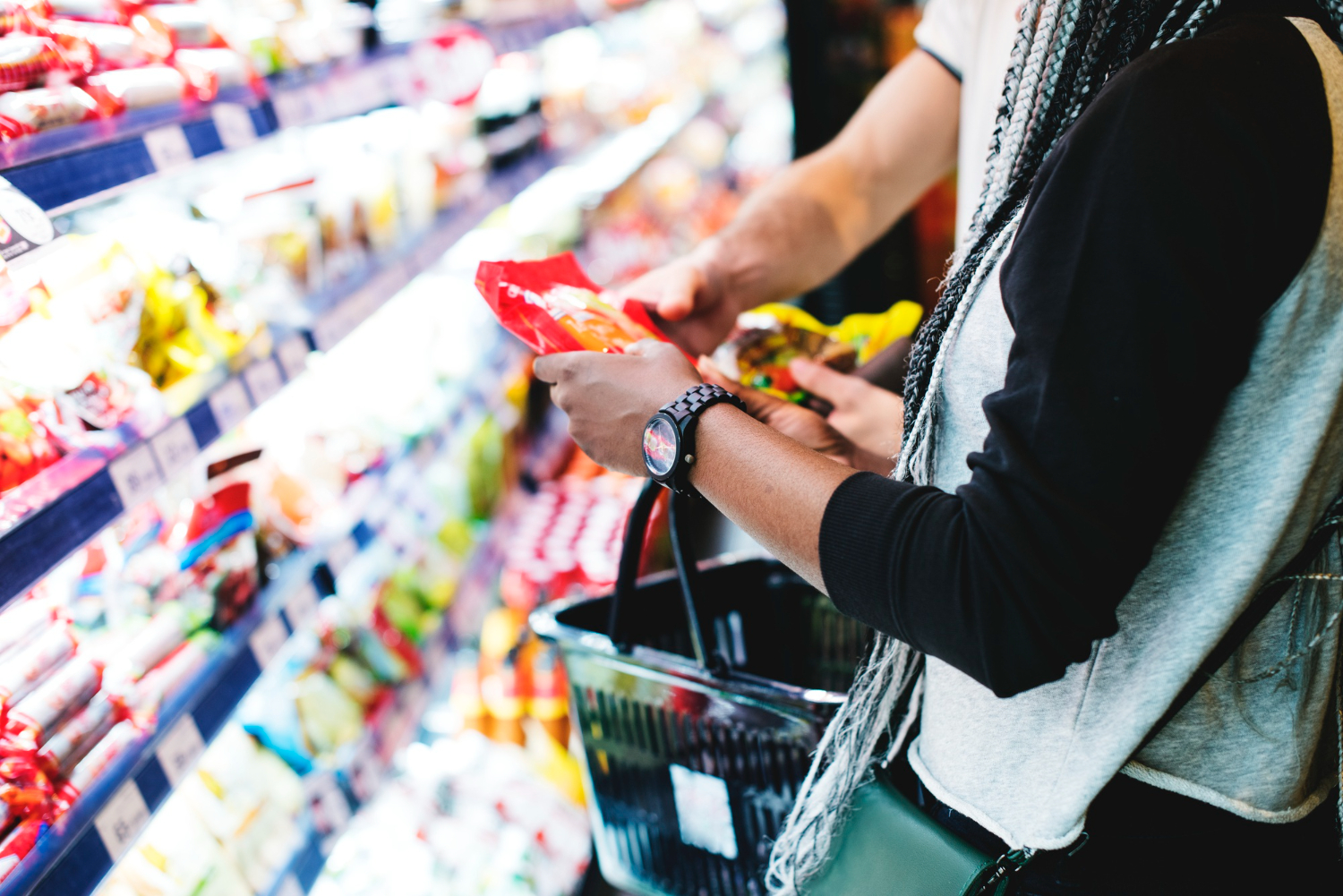
A cheap grocery trip can feel like a win.
You walk out of the store having spent $60 instead of $100, and it seems like you’ve done everything right.
But then a few days later, you’re back at the store buying the food you actually needed.
Now you’ve spent $60, then another $45, and you’re wondering whether you really saved anything.
That’s the difference between a cheap grocery trip and a well-budgeted grocery trip.
The cheapest receipt isn’t always the best result.
A well-budgeted grocery trip is one that gets you the food you need, fits into your overall spending plan, and doesn’t create a bigger problem later.
Cheap Doesn’t Always Mean Cost-Effective
Imagine you go grocery shopping with a $100 budget.
You manage to spend only $55.
Sounds great.
But you didn’t buy enough protein, you’re out of breakfast food, and you forgot several ingredients for the meals you planned to make.
Two days later, you make another trip and spend $40.
Now you’ve spent $95 total.
You technically had a $55 grocery trip, but you didn’t really have a $55 grocery week.
The better question isn’t:
“How little can I spend today?”
It’s:
“Can I get what I need without spending more than necessary?”
That’s a completely different goal.
A Well-Budgeted Trip Starts Before You Enter the Store
Good grocery budgeting doesn’t begin in the checkout line.
It starts at home.
Before you shop, take a look at what you already have.
Check the refrigerator, freezer, and pantry.
Then think about the meals you’ll need to make before your next shopping trip.
You don’t need a detailed meal plan with every meal scheduled down to the minute.
Even knowing what you’re making for a few dinners can make a huge difference.
Once you know what you already have and what you actually need, you can build a shopping list around the gaps.
That is much more effective than walking into the store and hoping you remember everything.
A Cheap Cart Can Still Be a Bad Cart
It’s possible to spend very little and still make poor choices.
Maybe you buy the cheapest version of everything, even though you know your family won’t eat some of it.
Maybe you skip foods you actually need because they’re more expensive.
Maybe you buy a huge package because the price per ounce is low, even though you live alone and won’t finish it.
Saving money isn’t useful if the food ends up in the trash or you have to replace it later.
The goal is to get good value, not simply the lowest possible total.
Food Waste Changes the Math
Food that gets thrown away isn’t a bargain.
Suppose you buy a large container of fresh berries because they’re cheaper per ounce than the smaller package.
If you eat half and throw the rest away, you may have been better off buying the smaller package.
The same applies to leftovers.
Cooking a huge meal can be economical if your household eats the leftovers.
If everyone gets tired of it and the rest ends up in the refrigerator for a week, the savings disappear.
Think about how much food your household actually uses—not just how cheap the package looks.
Know What You’re Trying to Accomplish
A well-budgeted grocery trip has a purpose.
Maybe you’re buying ingredients for five dinners.
Maybe you’re restocking basic pantry foods.
Maybe you’re shopping for a large family and need enough food to last two weeks.
Maybe you’re trying to keep this week’s spending low because you had an expensive grocery trip last week.
The goal will affect what belongs in your cart.
Without a goal, it’s easy to buy whatever looks good and then wonder why the total is higher than expected.
Don’t Confuse a Sale With Savings
Stores are very good at making you feel like you’re missing out if you don’t buy something.
A product is marked down.
A sign says “LIMITED TIME.”
Another says “BUY ONE, GET ONE.”
It feels like you should take advantage.
But a sale only saves you money if the item is useful to you.
If you spend $15 on something you weren’t planning to buy, you haven’t necessarily saved $5 because it was discounted.
You’ve spent $15.
A well-budgeted shopper can absolutely take advantage of sales. The difference is that the sale fits into the plan.
The Cheapest Store Isn’t Always the Cheapest Option
Where you shop matters, but so does what you buy.
Driving across town to save $5 might not make sense if you spend $8 in gas or add an extra hour to your trip.
Likewise, a store with lower prices isn’t necessarily cheaper for you if you’re buying more because the selection is larger or the layout encourages impulse purchases.
The best store is the one that gives you good prices on the things you regularly buy while making it reasonably easy to stick to your list.
Convenience Has a Price
Prepared foods can be more expensive than buying the ingredients yourself.
A pre-cut container of vegetables costs more than a whole vegetable.
A ready-made meal usually costs more than making a similar meal at home.
Individually packaged snacks often cost more than buying a larger package.
But convenience isn’t automatically a bad purchase.
If you’re exhausted after work and a prepared meal keeps you from ordering takeout, it may actually save money.
The important question is whether you’re getting enough value from the convenience to justify the extra cost.
A well-budgeted grocery trip leaves room for some convenience when it makes sense.
Don’t Buy More Just to Hit a Unit Price
Unit pricing can be helpful, but it can also be misleading.
A larger package may have a lower price per ounce.
That doesn’t mean it’s the better choice if you don’t need that much.
If you buy three pounds of something because it’s cheaper per pound and end up throwing away one pound, you’ve lost the savings.
Buy larger quantities when you know you’ll use them.
Otherwise, the smaller package may be the better financial decision.
Leave Room for Things You Enjoy
A well-budgeted grocery trip shouldn’t feel like punishment.
If you enjoy snacks, desserts, specialty coffee, or a favorite brand of something, include those things when your budget allows.
The problem isn’t buying treats.
The problem is buying so many extras that there’s no money left for the things you actually need.
A simple approach is to cover your essentials first and then see how much room is left for extras.
That gives you flexibility without letting optional purchases take over the budget.
Use Your Budget as a Guide, Not a Dare
If you’ve budgeted $100 for groceries and your planned food costs $82, you don’t need to spend the remaining $18.
This sounds obvious, but people sometimes treat their grocery budget like a spending target.
It isn’t.
Your budget tells you how much you can afford to spend.
If you spend less, that’s perfectly fine.
You can carry the extra money forward, put it toward another household expense, or simply enjoy having stayed under budget.
Don’t Let One Expensive Trip Freak You Out
A grocery trip can be expensive for completely legitimate reasons.
Maybe you’re buying several pantry staples at once.
Maybe you haven’t gone shopping in two weeks.
Maybe you’re preparing for a holiday.
Maybe your freezer is empty.
One large receipt doesn’t automatically mean you messed up.
Look at what you bought.
If the majority of the food was necessary and will last for several weeks, the higher total may be perfectly reasonable.
What matters more is your overall grocery spending.
Look at the Bigger Picture
Instead of judging every shopping trip on its own, look at your spending over a month.
Let’s say your goal is $500.
You spend $135 one week, $90 the next, $115 after that, and $145 during the final week.
That’s $485.
Some individual trips were expensive. But your overall budget worked.
This is why monthly grocery budgets can be more useful than strict weekly limits.
Your spending naturally goes up and down.
The goal is to keep the overall pattern under control.
A Well-Budgeted Grocery Trip Has Fewer Surprises
One of the biggest signs that your grocery budget is working is that you’re less surprised by the checkout total.
You know roughly what you’re buying.
You have an idea of what it should cost.
You know which items are essentials and which ones are extras.
You’ve checked what you already have at home.
You might even have a rough total in your head while you’re shopping.
You don’t need to predict the bill down to the penny.
You just need enough awareness that a $40 difference doesn’t come out of nowhere.
Ask Yourself These Questions Before Checking Out
If your cart is getting expensive, pause for a minute.
Ask:
Did I buy everything I actually need?
If not, make sure the essentials stay in the cart.
Did I buy anything I already have at home?
Put duplicates back unless you’re intentionally stocking up.
Are there items here that weren’t planned?
Decide whether they’re genuinely worth the cost.
Will we actually eat all of this?
If you’re not sure, don’t buy it simply because it’s cheap.
Does this fit into my overall grocery budget?
Remember what you’ve already spent this month.
These questions take less than a minute and can prevent a lot of unnecessary spending.
The Goal Isn’t to Win the Cheapest Receipt
It’s tempting to compare grocery totals.
Someone spends $50 and posts about it online. Someone else feeds a family of four for $75. Suddenly your $120 trip feels excessive.
But you don’t know their circumstances.
Maybe they already had a full pantry.
Maybe they bought very little fresh food.
Maybe they don’t include household products in their total.
Maybe they’re shopping for different meals or a different number of people.
Your grocery budget should be based on your household, not someone else’s receipt.
Cheap and Well-Budgeted Can Be the Same Thing
There’s nothing wrong with having a cheap grocery trip.
If you can get everything you need for $60, great.
The difference is that the low total should be the result of good planning rather than simply buying less food.
A cheap grocery trip asks:
“How little can I spend?”
A well-budgeted grocery trip asks:
“How can I get what I need while making the most of the money I have?”
Sometimes the answer will be $60.
Sometimes it’ll be $100.
Sometimes it’ll be $150 because you’re stocking up or feeding a larger household.
The number isn’t what makes the trip successful.
The Best Grocery Trip Is the One That Works
A successful grocery trip isn’t necessarily the one with the smallest receipt.
It’s the one where you bought what your household needs, avoided unnecessary waste, stayed reasonably close to your budget, and didn’t have to run back to the store two days later because you forgot half the essentials.
That’s what good grocery budgeting is really about.
Spend less when you can.
Spend more when you genuinely need to.
Buy things you’ll actually use.
And most importantly, make your grocery budget work for your real life—not for an imaginary version of it where everyone eats perfectly planned meals and never wants a snack.