Buying pantry staples in bulk can be one of the easier ways to lower your grocery costs.
Unlike fresh foods, many pantry items can sit around for weeks or months without becoming a problem. That gives you more time to use them and makes a lower bulk price more useful.
But that doesn’t mean every giant bag or multipack is a good deal.
The best bulk purchases are usually foods you already buy regularly, store easily and know you’ll finish.
Start With the Staples You Already Use
The safest rule is simple:
Don’t buy in bulk to start using something. Buy in bulk because you already use it.
If your family goes through rice every week, a larger bag may make sense.
If you rarely eat rice, buying 20 pounds because the price per pound looks good isn’t saving you anything.
Your normal grocery habits are the best guide.
Rice
Rice is one of the easiest pantry staples to buy in larger quantities.
It stores well, works with plenty of meals and can be used as a side dish, base for bowls, filling or part of a larger meal.
If you eat it regularly, compare larger bags with smaller ones and check the unit price.
Just make sure you have a dry place to store it.
Pasta
Pasta is another good bulk candidate for many households.
It lasts a long time, doesn’t require much storage preparation and can become several different meals.
You can use it with:
- Tomato sauce
- Meat
- Beans
- Vegetables
- Cheese
- Leftover chicken
If pasta is something you regularly keep on hand, buying several boxes when the price is good can make sense.
Oats
If your household eats oatmeal regularly, oats are usually easy to stock up on.
They’re inexpensive, versatile and useful for more than breakfast.
You can use them for baking, homemade granola and other recipes.
Just compare the cost of larger containers with regular-size packages and make sure the bulk version doesn’t leave you with more than you can reasonably use.
Dried Beans
Dried beans can be a good bulk purchase if you cook with them regularly.
They take up relatively little space compared with the amount of food they provide and can be used in soups, chili, rice dishes and other meals.
They’re especially useful if you’re comfortable cooking them from scratch.
If you don’t use dried beans often, though, buying a huge bag isn’t necessarily helpful.
Canned Beans
Canned beans can also be worth stocking up on.
They’re convenient, inexpensive and useful for quick meals.
Because they don’t require refrigeration until opened, they’re easier to keep around than many fresh foods.
Look at the expiration or best-by information and organize your pantry so older cans get used first.
Canned Tomatoes
Canned tomatoes are another pantry staple that can earn a permanent spot in your stock-up list.
They work in pasta sauce, chili, soup, casseroles and plenty of other meals.
If you regularly cook with them, buying several cans when they’re on sale can be a smart move.
There’s little benefit to buying a case, however, if you only use one can every few months.
Peanut Butter
Peanut butter can be a reasonable bulk purchase because it’s shelf-stable and generally used in relatively small amounts.
It’s useful for sandwiches, snacks, oatmeal, smoothies and baking.
Still, check the package size.
A huge container isn’t necessarily more convenient if it takes forever to finish.
Flour
If you bake regularly, flour can make sense to buy in larger quantities.
It’s another staple where the bulk price can be considerably better.
Storage matters, though.
Keep it somewhere cool and dry, and don’t buy more than you have a realistic way to store and use.
If you only bake a few times a year, stick with a smaller package.
Sugar
Sugar is another pantry item that can be easy to stock up on if you use it regularly.
It doesn’t spoil quickly when stored properly, and it works for baking and cooking.
This is a good example of a product where buying a larger package makes more sense for someone who uses it frequently than someone who rarely cooks or bakes.
Cooking Oil
Cooking oil can be worth buying in a larger container, particularly if you use it frequently.
But there’s a catch.
You don’t want to buy more oil than you can reasonably use while it’s still in good condition.
Compare the bulk price with smaller bottles, and think about how much you go through in a typical month.
A slightly larger bottle may be useful.
A huge container may not be.
Broth and Stock
If broth is something you use regularly for soups, sauces, rice or cooking, stocking up can make sense.
Shelf-stable cartons and cans can sit in the pantry until you need them.
This is another good item to buy when it’s on sale if you know you’ll use it.
Cereal
Cereal can go either way.
If your household eats the same cereal constantly, buying multipacks or larger packages during a good sale can save money.
But cereal is also easy to overbuy.
You may get tired of one variety before you finish the supply.
Don’t stock up just because the package is discounted.
Stock up on the cereal that actually disappears from your pantry.
Crackers and Shelf-Stable Snacks
Crackers, pretzels and similar snacks can work for bulk buying if your household goes through them quickly.
But be honest about your habits.
A large package of snacks can disappear quickly—or sit around until it becomes stale.
If your family tends to finish these foods, bulk may make sense.
If not, buy smaller quantities.
Baking Staples
For people who bake regularly, buying certain baking staples in bulk can make sense.
Things like:
- Flour
- Sugar
- Baking soda
- Baking powder
- Cocoa powder
- Chocolate chips
can be useful to keep around.
But check expiration dates and storage requirements.
There’s no reason to buy a giant container of something you only use twice a year.
Spices You Actually Use
Spices are a little trickier.
The larger container may have a lower price per ounce, but spices can lose flavor over time.
Buying huge quantities isn’t helpful if you rarely use them.
Instead, focus on the spices you reach for constantly.
If you use garlic powder, cinnamon or chili powder every week, a larger container may make sense.
If you use a specialty spice once every six months, stick with the smaller jar.
Vinegar
Certain types of vinegar can be useful pantry staples because they’re versatile and store well.
They can be used in cooking, dressings, sauces and other recipes.
If you use them frequently, a larger bottle can be worthwhile.
Just don’t buy a gallon because the price per ounce looks impressive if you’ll barely make a dent in it.
Soy Sauce and Other Condiments
Shelf-stable condiments can sometimes be good bulk purchases.
Soy sauce, hot sauce and similar products can last a while, depending on the product and storage instructions.
The key is knowing what your household actually uses.
Buying a multipack of three sauces when everyone only likes one of them isn’t a savings.
Pasta Sauce
Jarred pasta sauce can be useful to stock up on if it’s something you regularly buy.
It’s easy to store and can turn a basic box of pasta into a quick meal.
Look for sales rather than assuming the largest multipack is always cheapest.
Sometimes the best opportunity is simply buying several regular-size jars at a good price.
Canned Tuna and Other Shelf-Stable Proteins
Canned tuna and similar shelf-stable protein options can be practical pantry staples.
They’re useful for quick lunches and meals when you don’t have fresh ingredients available.
As with everything else, only stock up if they’re foods your household actually eats.
There’s no savings in creating a pantry full of products nobody wants.
Don’t Automatically Buy These in Huge Quantities
Some pantry foods are less useful to buy in very large amounts.
Be cautious with:
- Specialty ingredients
- Foods your household is trying for the first time
- Snacks you tend to get tired of
- Large containers of rarely used spices
- Products with short shelf lives
- Anything you don’t have adequate storage for
A pantry staple should be something that regularly earns its place in your kitchen.
Look for Sale Prices, Not Just Bulk Prices
You don’t have to buy the biggest package to get a bulk-buying advantage.
If pasta is on sale for $1 a box and you normally pay $2, buying several boxes can give you the same basic benefit.
You get the lower price without committing to a massive package.
This is especially useful when storage space is limited.
Check the Unit Price
This should become automatic.
A larger package isn’t always cheaper per ounce.
A multipack isn’t necessarily a better deal than individual packages on sale.
Compare the unit prices before deciding.
Then consider whether you’ll use the entire quantity.
Price and practicality need to work together.
Think About Storage Before Stocking Up
Pantry staples may last a long time, but they still need to be stored properly.
Make sure you have enough room and that the food will be protected from moisture, heat and pests.
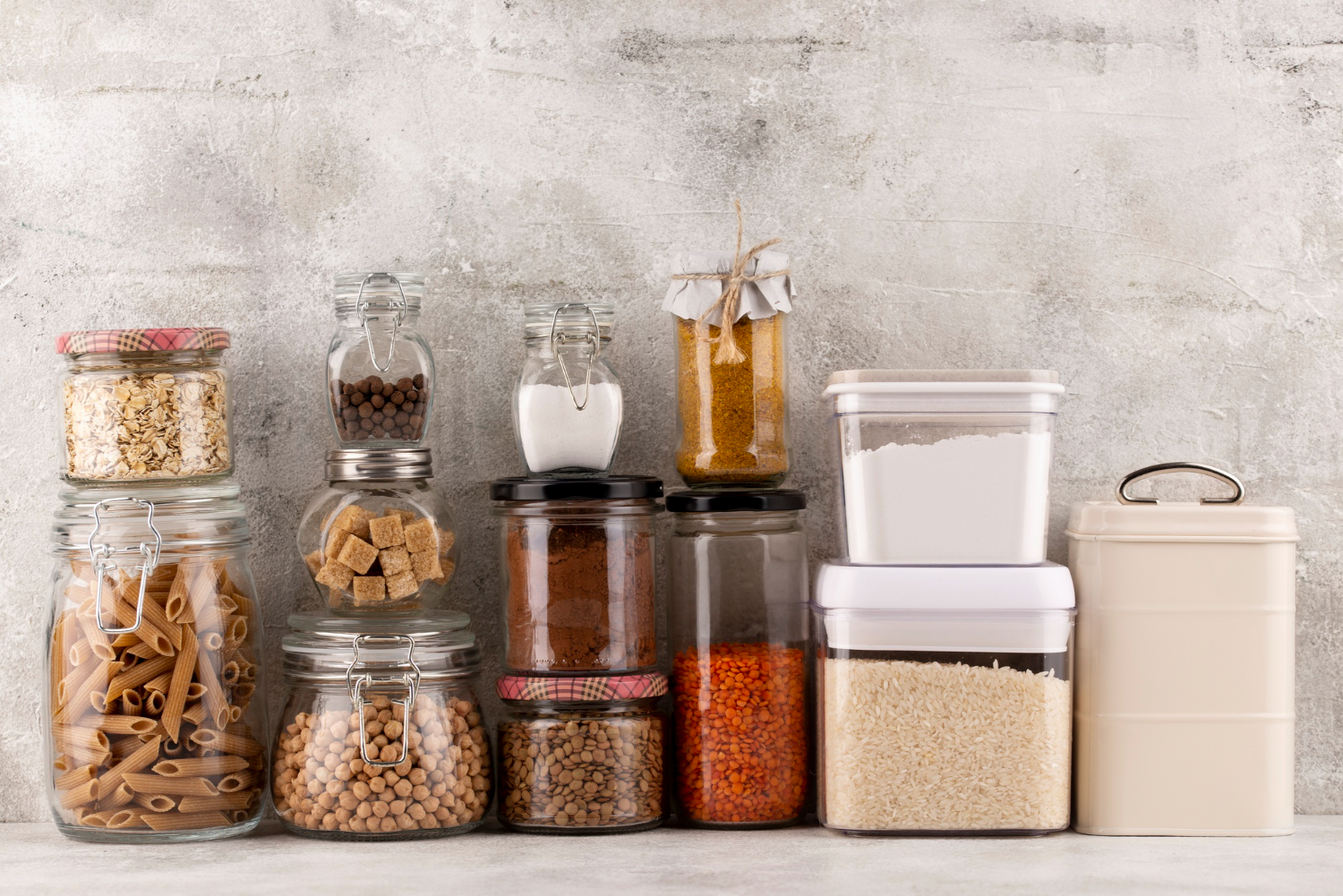
If you’re transferring bulk foods into containers, label them so you know what they are and when you bought them.
Organization makes it much easier to actually use what you purchased.
Keep a Short List of Your Best Bulk Buys
You don’t need to become a bulk-shopping expert.
Just figure out which foods your household reliably goes through.
Your list might look something like:
- Rice
- Pasta
- Oats
- Canned tomatoes
- Beans
- Flour
- Cooking oil
Someone else’s list might look completely different.
That’s fine.
The best bulk staples are personal.
They’re based on what you cook, what your family eats and how often you need to replace each item.
Don’t Let Your Pantry Become a Warehouse
A stocked pantry can be helpful.
An overflowing pantry can make grocery shopping harder.
If you have so much food that you can’t see what’s there, you’re more likely to buy duplicates and forget about older items.
Try to use what you have before replacing it.
Rotate older products toward the front.
And occasionally make a meal based mostly on pantry ingredients.
The Best Bulk Buy Is Something You Were Going to Buy Anyway
That’s really the whole strategy.
You don’t need to stock your pantry with enormous quantities just because someone says bulk buying saves money.
Buy more of the things you already use, especially when you find a genuinely good price.
Rice, pasta, oats, beans, canned tomatoes, flour and other shelf-stable staples can be great candidates because they’re versatile and generally easy to store.
But the size of the package shouldn’t make the decision for you.
Buy the quantity your household can use. Pay attention to the unit price. And don’t turn your pantry into a storage unit for food you may never get around to eating.
That’s how bulk buying becomes a grocery-saving strategy instead of just another way to spend more at once.